Botanical and plants
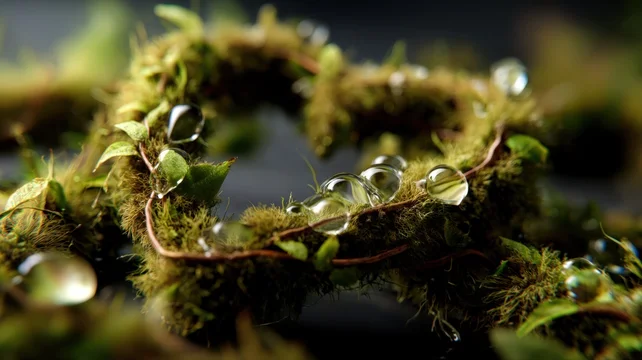
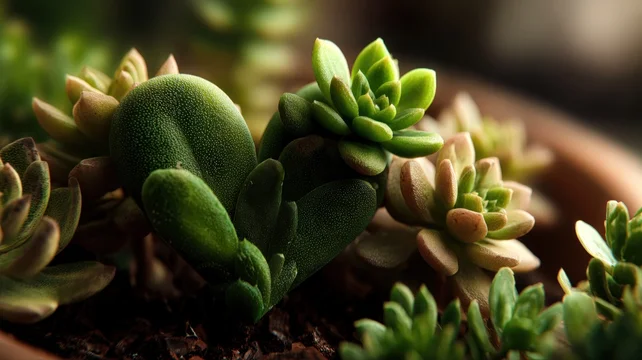
Foliage is bought as material rather than as an occasion. A eucalyptus sprig laid across a label, a monstera leaf lit from behind, moss filling the frame edge to edge: the job is to make a serum bottle or a paper carton read as plant-derived before anyone has read a word of the pack. That is a different purchase from a flower, which arrives carrying a date and a sentiment with it, and when the brief has either of those attached, flowers and floral is the faster shelf to start from.
A background leaf and a subject leaf are not the same buy
As a background, a leaf has to be anonymous. Continuity of tone across the frame matters, the species does not, and a waxy highlight that blows out on a rubber plant will blow out the same way on a philodendron. As a subject, the species is the whole asset, because a hero leaf sitting next to an ingredient name is read as that ingredient. If the pack says aloe and the frame shows an agave, the image contradicts the label, and nobody in the approval chain will blame the designer's eye for plants.
That is also why the second buy is harder. A background can be shot soft, lit flat and cropped from anything green; a subject has to survive a botanist in the client's marketing team, hold a readable silhouette against the pack, and carry the backlight that makes a leaf look alive rather than printed.
A leaf is now part of the claim
In the EU, the definition of an environmental claim covers any message "including text, pictorial, graphic or symbolic representation", and the practices inserted into consumer law by Directive (EU) 2024/825 have applied since 27 September 2026. A wreath of leaves around a word like "green" is therefore not decoration separate from the wording, and the generic claim is what the rules bite on. General information, not legal advice — but worth raising before the pack goes to print rather than after.
Where a generated plant gives itself away
- Veins. Monocots run several major veins parallel from base to tip; most other leaves are netted, with laterals branching off a midrib, and palmate venation radiates from the point where the petiole meets the blade. Pick one vein at the margin and follow it inwards. The path has to arrive somewhere.
- Compound or simple. Leaflets along an axis is pinnately compound, leaflets diverging from a single point is palmately compound. Generated foliage blends the two, or runs leaflets off an axis that then continues as unbroken blade.
- Monstera. Juvenile leaves are small and mostly entire, and the holes come with maturity, so a knee-high plant carrying heavily fenestrated leaves is wrong. The same page notes it is not a philodendron, which makes "split-leaf philodendron" a keyword rather than a name.
- Cacti. Spines grow from areoles, and areoles are universal in the cactus family and found in no other. Spines rising straight out of smooth skin with no cushion beneath them is the tell.
- The label. Adobe Stock requires contributors to select Created using generative AI tools whenever generation creates or alters the main subject, so the disclosure is on the asset page. It tells you how the frame was made, not whether the plant is right.
When the brief is really the whole stand of trees rather than one plant in it, forest and landscape is where to look next.




 00:08
 00:08




 00:07
 00:10





 00:08

 00:08
 00:10
 00:07
 00:10












 00:10
 00:08
 00:08
 00:10
















 00:10
 00:05























Need a shot that isn't here? Write to me.
Get in touchMore collections
See all 1,185
Textures and surfaces
Marble, stone, plaster, fabric and metal surfaces for backgrounds, overlays and product scenes.
 1,093
Abstract backgrounds and animations
Gradients, kaleidoscopes, particles and fluid motion for backgrounds and transitions.
 721
Food and drink
Coffee, tea, desserts and table scenes for food and hospitality.